


This is Optimizer, a weekly newsletter sent from Verge senior reviewer Victoria Song that dissects and discusses the latest gizmos and potions that swear they’re going to change your life. Opt in for Optimizer here.
Europe is melting, the eastern US is currently trapped in a “heat dome,” the Midwest has the corn sweats to look forward to, and if you’ve never felt the oppressive, sticky misery of monsoon season in Asia — consider yourself blessed. But as folks duke it out on social media about who has it hotter (and whether air conditioning is ethical), it’s time to address a nonnegotiable truth of surviving summer: hydration.
Surely, staying hydrated isn’t a controversial topic. Something as simple as drinking water can’t possibly be twisted by the wellness wild west. But alas, a recent TikTok search proved me wrong. “Sometimes water alone just isn’t enough,” an influencer named Grace, a “holistic nutritionist,” says in a partnership video with Liquid IV. She mixes a packet in, stirring with an aesthetic glass straw while spitting general truths about why electrolytes are important. “It’s about what your body does with the water that matters.”
Next, I was blasted with a clip of actress Mayim Bialik’s podcast emblazoned with the words “You’re hydrating wrong!” In it, Bialik’s guest, who is billed as an “exercise physiologist and nutrition scientist,” claims that drinking a lot of water won’t hydrate you properly. You’ll just pee it out, she says, because plain water doesn’t have the “ideal pressure” due to a lack of sodium and glucose. Rounding out my cursed TikTok search, another so-called nutritionist stated that ice water is actually dehydrating based on traditional Chinese medicine principles because the “body cannot hold onto the water.”
These are all peak examples of the wellness grifter playbook.
It’s true that the body needs electrolytes, minerals that hold a positive or negative electric charge when dissolved in water: things like potassium, magnesium, and sodium. (Sugar isn’t technically an electrolyte, but it too is necessary for hydration.) They’re important because they help maintain appropriate fluid levels within your cells, contract and relax muscles, and play into several other chemical reactions within your body. You lose electrolytes when you sweat and whenever you pee as waste products. These are all facts that influencers and wellness brands use to establish credibility by letting you in on the “real science” of how hydration works.
The next turn in the playbook is then convincing you that “drinking more water” — a long-established, common-sense way to hydrate that’s often recommended by doctors — is not good enough. There is a more optimal way, a secret that you’re about to be let in on. To finish it off, you’re either fed a dubious but harmless hack (e.g., room-temperature water is better for hydrating than cold water) or told the electrolyte powder they’re shilling will hydrate you so much better or faster than plain water could.

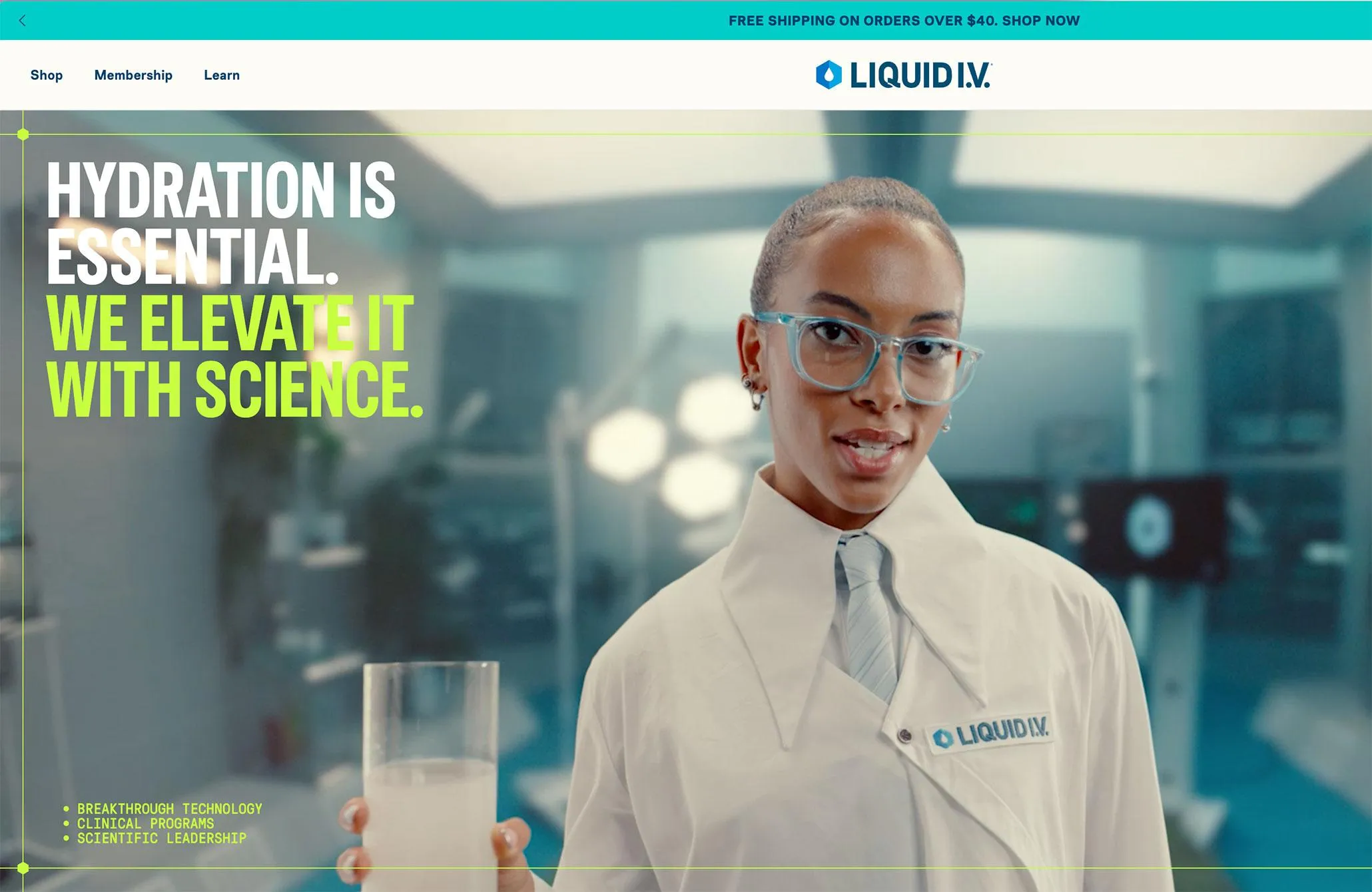
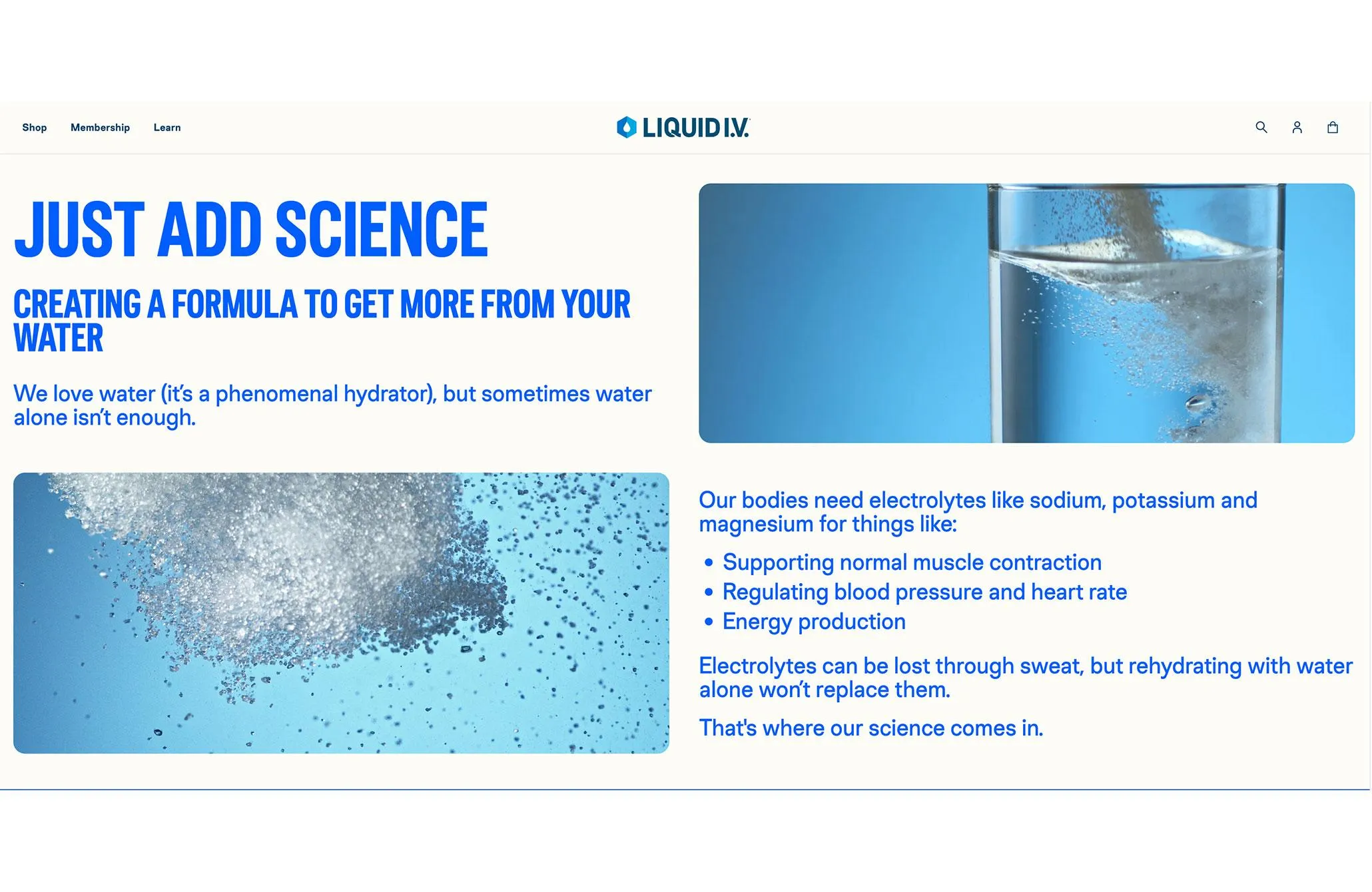
Take Liquid IV’s science page. “Hydration is essential,” the site says, as a video of stylish scientists clad in chunky glasses and crisp lab coats plays in the background. “We elevate it with science.” Specifically, “breakthrough technology, clinical programs, and scientific leadership.” Scroll a bit further down the page, and you’ll see the words “Water is the least studied nutrient” and “Just add science … We love water (it’s a phenomenal hydrator), but sometimes water alone isn’t enough.”
The site then goes on to describe Liquid IV’s four-step hydration philosophy. It boils down to: (1) making drinks tasty so you drink more; (2) adding “hydration multipliers,” aka a proprietary blend of electrolytes; (3) taking credit for sodium in the mix helping you retain water; and (4) taking credit for the mix’s other electrolytes doing what electrolytes do. A separate page for its clinical study results says that Liquid IV helps people rehydrate quicker and retain fluids longer than water alone. Which, again, is how electrolytes work. It also says that the sugar-free version doesn’t spike blood glucose levels, which, to state the obvious, is an expected result from a sugar-free beverage.
This is effective at selling the message that, in a vacuum, Liquid IV — and other electrolyte mixes — are better than water at hydration. But it’s also missing a lot of key context.
The FAQ on Liquid IV’s site notes that the product is safe for daily consumption “during or after tough workouts, while traveling, after a night out, or for heat-related rehydration.” That’s not “replace all your water with Liquid IV.” It goes on to suggest one serving a day and to consult a doctor for further questions. That’s all fine, but electrolyte imbalances are a two-way street. There’s such a thing as too many electrolytes.

Take sodium. The CDC says that the average American gets about 3,300mg of sodium per day, which is above the federal recommendation of less than 2,300mg. Liquid IV has over 20 flavors, so the nutrition label varies, but generally a single serving has roughly 500 to 520mg of sodium — or more than 20 percent of your daily recommended intake. Barring a condition or medication that affects your sodium levels, like POTS, you probably get enough of this particular electrolyte from your diet. And salt isn’t the only ingredient to be mindful of. Ask any marathoner or cyclist. Chugging too much of a sugary sports drink can trigger a nasty case of the runs.
But say you are someone who does need to be extra mindful of hydration. Overdoing electrolyte mixes is easy to do and can have unintended health consequences. My spouse suffers from severe, chronic migraines. In the summer, they’re often triggered by dehydration and heat intolerance. Migraines are horrible, but my spouse is doubly unlucky in that theirs often come with intense nausea and vomiting. It’s a vicious cycle where dehydration worsens the migraine, but the nausea makes it so they can’t actually rehydrate themselves. Several times, I’ve had to rush them to the emergency room for a saline drip. So in an effort to be proactive, last summer they started drinking Pedialyte and Liquid IV daily to prevent heat-related migraines.
It was a genuine attempt to take better care of themselves. But they ended up giving themselves high blood pressure from all the salt — which can happen with too much electrolyte supplementation, along with other issues like increased cardiovascular strain.

There is a time and place for electrolyte mixes and sports drinks. Mainly, when you need to quickly rehydrate yourself after losing a significant amount of bodily fluids in a short time and your daily diet can’t compensate for it. So, if you’re sweating buckets because you’re active outdoors for several hours in the hot sun? Yeah, an electrolyte drink is appropriate. If you, a healthy human, decided for some cockamamie reason to go for a 30-minute run in extreme heat, but will immediately go back into air conditioning to chow down on Grandpa Rick’s barbecue? You probably won’t die drinking a Powerade but could also stick with plain water. If you caught norovirus and are gastrointestinally suffering out both ends, go with God and get that Gatorade. But you don’t need to go crazy about how you hydrate. You don’t even have to spend a ton of money on electrolyte packets. Half a lemon and a pinch of salt in your water is an effective, budget-conscious alternative. (Or pickle juice, if that’s more your vibe.)
I deeply understand the desire to “hydrate better.” I’ve passed out in hot weather, sometimes while long-distance running. It’s not fun! The few times it happened were so terrible, it motivated me to be better about hydrating in hot weather. It’s why I’ve tested multiple wearable sweat patches that claimed to help optimize my electrolyte intake when I was training for half-marathons in sweltering heat. It’s why I’ve reviewed smart water bottles of many flavors and variations. (Adding flavoring is also a valid “hack” to drinking more water.) Earlier this year, I installed an at-home urinalysis lab in my toilet because of course I did. I’ve invested in a ton of sports hydration packets and energy goos. Ironically, what’s helped most is a regular Owala bottle. Apparently, I like drinking water better out of a straw.
Which is a fancy way of saying I’ve firsthand tested several “optimized” ways to hydrate. My verdict is common sense, scrolling past influencers, and in most cases, drinking some nice cold water are good enough.
Source link